Wording accommodation for non-kimono in hadanugi dousa

Posted under Tags

tl;dr To ask if there any objections with clarifying wording in hadanugi dousa that it's not strictly for kimono.

Hadanugi dousa was originally meant for kimono, however the general idea of a robe-like outfit where one side hangs freely around the waist (so not arm out of sleeve but a very specific appearance) in practice exists for more than just kimono. As a reminder of the examples we're currently using:

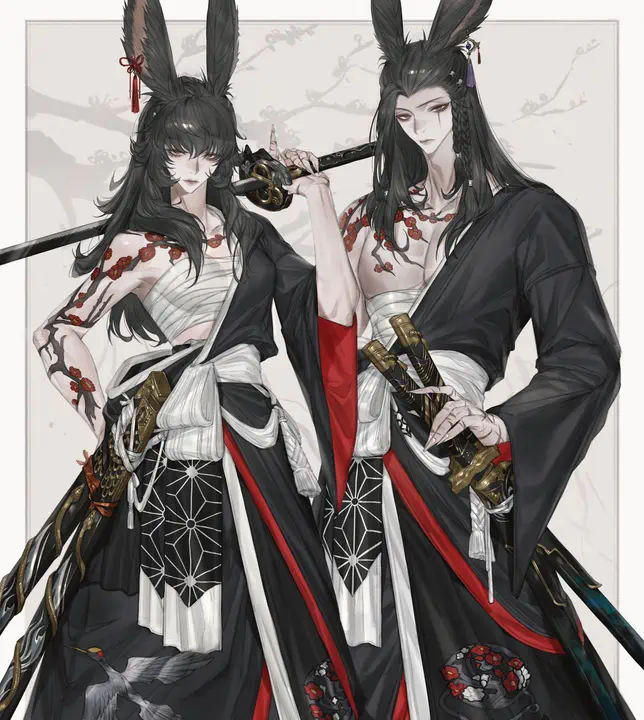
Hadanugi dousa had its implication to open kimono (and therefore kimono and Japanese clothes) removed in topic #18733 so the tag could more freely accommodate more types of clothing. That being said, the wiki currently only specifies that it's for kimono. I want to add a bit of wording clarification that it can also be used for any similar long garment (e.g. dresses, robes and probably some hanfu) as long as it looks like the example images provided.

I ask this in the wake of having to deal with an incident where a user was removing any and all Japanese-adjacent tags from posts of characters from Chinese copyrights/characters - this is one part of that. I'm not sure if this could somehow be contentious to do but if it somehow meant another tag would need to be made, my response to that would be that I don't think it makes sense to fragment tagging into two tags for the same thing just because some users may be allergic to using a Japanese tag on something that may have Chinese vibes to it.

Curiously related reply from a different topic that I agree with:

araneus said in forum #444342:

[..] are basically visually indistinguishable (or at least most illustrations depict them indistinguishably), except one is from Chinese and the other from Japanese. [..]

Tagging a visually same thing differently based on the character's nationality(?) seems a bit silly. [..]

As the quoted reply suggests, I personally agree that we should avoid fragmenting tags for visually identical (or similar) concepts.

That being said, I can understand why some users might feel strongly about using Japanese-specific tags on Chinese-themed characters (and vice versa). Given the complex historical and geopolitical context in East Asia, nationalist sentiments can inevitably leak into tagging and become a sensitive issue. Forcing users to use a culturally specific tag might only invite more friction down the road.

To find a constructive compromise, a more sustainable (though perhaps slightly cumbersome) approach might be to rename such tag to a more culturally neutral, descriptive term that focuses on the visual action itself (e.g., one_sleeve_tucked or something similar). We could then make the Japanese term (hadanugi_dousa) and any relevant Chinese equivalents into aliases pointing to this neutral tag.

Out of the 9 years that this tag has existed for, there's only been 15 pages of removals and almost all of them either came from reverting changes from a tag vandal who added thousands of tags to hundreds of posts or blatant mistags. This is the only other time that the tag has been removed outside of those circumstances, so I don't think even the most hardline nationalists really care or at least that hasn't been tested strongly yet. On nationalist sentiments leaking into site maintenance, I mostly see that in the comments sections or wiki changes more than anything (topic #35737 comes to mind).

I did forget to mention but I DMailed the user mentioned in the original post who removed those tags recently and they said they understood as far as how the tag should be used instead of trying to fight it. With that in mind, I think the name is fine for now. I'd prefer not to rename it if possible to prevent it from potentially being misunderstood in its usage, and I'm not so sure "tucked sleeve" works when it's more about an entire half of a robe-like garment hanging around the waist.

I think that their main understanding of the tag was that it should only be used for kimono so they decided to remove it and it may not have been apparent to ask for clarification/a sanity check first on doing it, which is understandable in a way. Specific "pose" or "style"-like tags like this, at least to my knowledge, don't face much resistance - it's usually more about traditional clothes where you'll see someone get antsy every now and again (ex. kimono vs hanfu).

Updated by WRS

If that is the case, then retaining the current name for now and letting the wiki clarification do its work should be fine. However, I still suspect that the lack of conflict so far might just mean the tag hasn't been heavily tested on Chinese characters yet (given that under its current understanding, most people wouldn't use a kimono-specific tag on those Chinese characters).

Let's see how it goes with the updated wiki. If any friction arises in the future, we can keep the idea of the neutral renaming on the table as a backup.

On a side note, I actually had a slight linguistic question about the tag name itself. Hadanugi dousa (肌脱ぎ動作) explicitly includes dousa (動作, action/movement), which implies the continuous action itself. However, this tag is used to describe that half-undressed state of clothing. In my opinion, using Hadanugi ("肌脱ぎ") alone is sufficient to describe this state, unless the illustration specifically captures the moment of a character performing the action.

Furthermore, Hadanugi (肌脱ぎ) itself doesn't inherently specify a "partial" removal (it's just literally "exposing the skin by undressing"). Technically, removing only one sleeve is Kata Hadanugi (片肌脱ぎ), while removing both sleeves is Moro Hadanugi (諸肌脱ぎ). The latter somewhat overlaps with clothes_around_waist, except that Moro Hadanugi refers to the upper part of the robe hanging down while secured by a belt/obi, rather than the more common scenario of sleeves being tied around the waist. Examples: post #9938405, post #8062854, post #7756016, post #4560053 (which was previously mentioned in forum #188339)

Updated by araneus

araneus said in forum #444631:

On a side note, I actually had a slight linguistic question about the tag name itself. Hadanugi dousa (肌脱ぎ動作) explicitly includes dousa (動作, action/movement), which implies the continuous action itself. However, this tag is used to describe that half-undressed state of clothing. In my opinion, using Hadanugi ("肌脱ぎ") alone is sufficient to describe this state, unless the illustration specifically captures the moment of a character performing the action.

Furthermore, Hadanugi (肌脱ぎ) itself doesn't inherently specify a "partial" removal (it's just literally "exposing the skin by undressing"). Technically, removing only one sleeve is Kata Hadanugi (片肌脱ぎ), while removing both sleeves is Moro Hadanugi (諸肌脱ぎ). The latter somewhat overlaps with clothes_around_waist, except that Moro Hadanugi refers to the upper part of the robe hanging down while secured by a belt/obi, rather than the more common scenario of sleeves being tied around the waist. Examples: post #9938405, post #8062854, post #7756016, post #4560053 (which was previously mentioned in forum #188339)

肌脱ぎ is specifically "naked to the waist" (asymmetrically so, in our case). I assume 動作 is using another definition more akin to "bearing" or "demeanor" (or if we want to get loose with the translation "vibe").

1